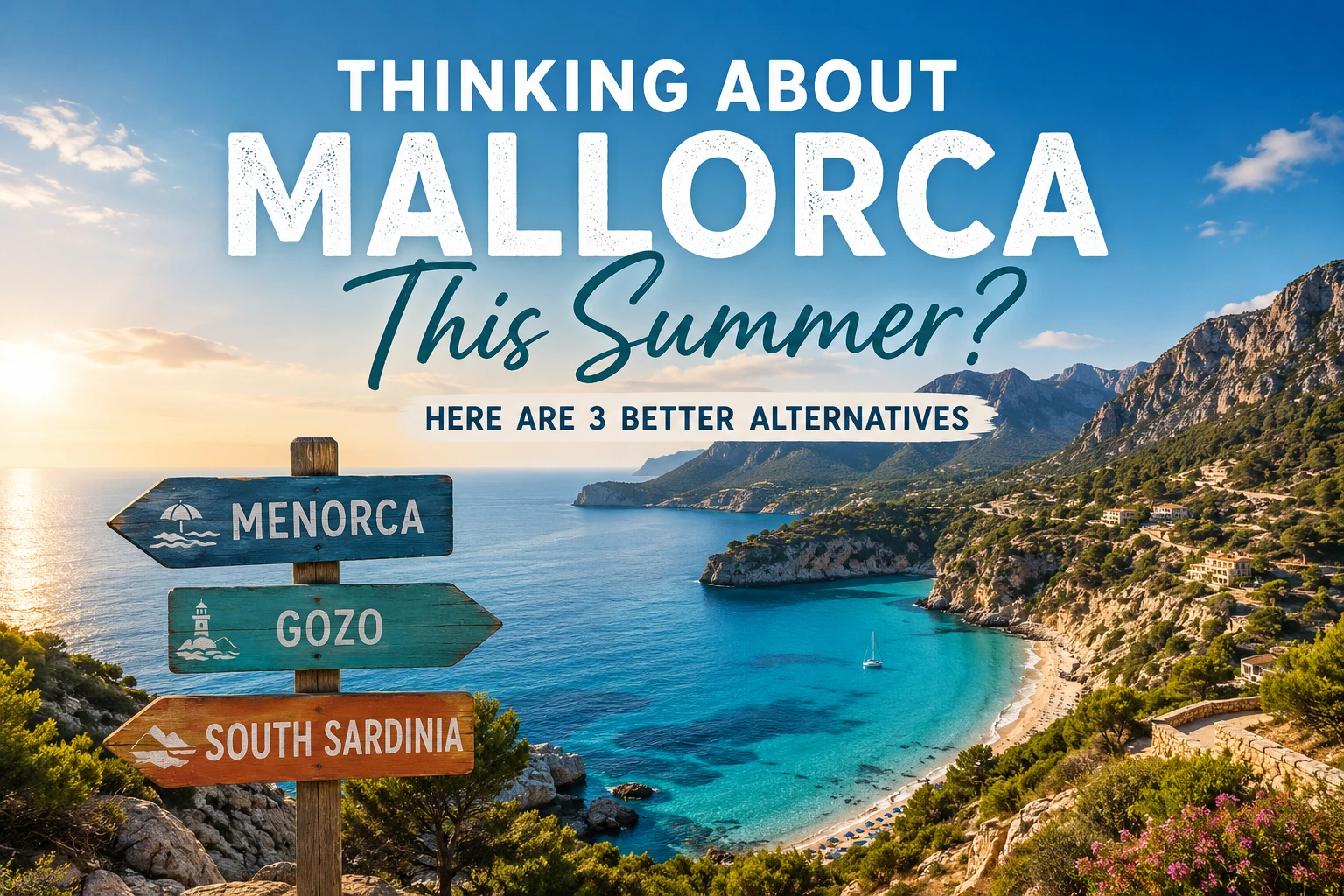
Thinking About Mallorca This Summer? Here Are 3 Better Alternatives
Mallorca is one of those places that almost sells itself.
Turquoise water, limestone cliffs, charming villages, beach clubs, mountain roads, sunny weather, short flights from the UK and enough hotels, restaurants and resorts to make planning feel easy. For many British travellers, Mallorca has become the default summer holiday choice.
And to be fair, Mallorca can be beautiful.
But that is exactly the problem.
In peak summer, especially in July and August, Mallorca is no longer just a Mediterranean island. It becomes one of Europe’s most pressured holiday destinations. Beaches fill up early. Roads become slow. Parking becomes frustrating. Prices rise. Restaurants get booked out. The peaceful island escape many travellers imagine can quickly become a crowded, expensive and stressful version of itself.
The issue is not that Mallorca is “bad”. It is that too many people are trying to enjoy the same small island at the same time.
So before you book another summer trip to Mallorca, it may be worth asking a better question:
Is there somewhere similar, but calmer, more enjoyable and easier to love?
Here are three better alternatives to Mallorca this summer.
Why we would think twice before booking Mallorca in peak summer
Mallorca receives huge visitor numbers compared with its size. For an island, that kind of pressure changes the travel experience completely.
For tourists, this often means the holiday feels less relaxed than expected.
The most famous beaches can become packed by late morning. Popular coves that look untouched in photos may require early starts, long walks, difficult parking or shuttle systems. In Palma, Sóller, Deià, Valldemossa and other well-known areas, the charm is still there, but it is shared with thousands of other visitors trying to capture the same moment.
The result is simple: Mallorca can still be beautiful, but in peak season it often stops feeling effortless.
There is also the cost. When demand is high, accommodation prices rise. Restaurants in popular areas become more expensive. Rental cars, beach clubs and last-minute bookings can quickly push a “simple island holiday” into a much higher budget than expected.
Then there is the local side.
Overtourism is not only inconvenient for visitors. It affects the people who live there all year. In recent years, Mallorca and the wider Balearic Islands have seen protests against mass tourism, with residents raising concerns about housing affordability, holiday rentals, traffic, pressure on public spaces and the loss of everyday local life.
This matters because travel should not simply be about finding the cheapest flight and the prettiest beach. A good trip should also make sense for the destination.
When a place is overwhelmed, nobody really wins. Tourists get a more crowded and expensive holiday. Locals get less space, higher costs and more pressure on their communities. Nature gets damaged by constant foot traffic, waste, traffic and coastal overcrowding.
That is why Mallorca is worth checking carefully before you book.
Not because you should never go.
But because in peak summer, there may be better choices.
1. Menorca, Spain
Menorca
Best for: Quiet beaches, families, natureIf you like the idea of Mallorca but want something calmer, Menorca is the most natural alternative.
It is still part of the Balearic Islands, still easy to understand as a Mediterranean beach escape, and still offers the same kind of clear water, coves, whitewashed villages and relaxed island atmosphere that many travellers want from Mallorca.
But Menorca feels different.
Where Mallorca often feels busy, developed and highly commercial in summer, Menorca is slower and more restrained. It has avoided some of the most intense mass tourism seen on its larger neighbour, partly because its identity is closely tied to nature, local life and sustainability.
That does not mean Menorca is empty. It is still popular, especially in summer. But the rhythm is different. The island rewards travellers who want beaches, walks, simple seafood meals, harbour towns and peaceful evenings more than nightlife and packed beach clubs.
For beaches, Menorca is exceptional. Cala Macarella, Cala Macarelleta, Cala Mitjana, Cala Turqueta and Son Bou are among the best-known names, but the island is full of smaller coves and coastal walks. Some beaches require effort to reach, which naturally filters out part of the crowd. If you are willing to walk, start early or explore beyond the obvious places, Menorca can still feel genuinely special.
The island is also ideal for travellers who enjoy movement without chaos. The Camí de Cavalls, a historic coastal route around the island, is one of Menorca’s great strengths. You can hike sections of it, discover quieter coves, and build a trip around nature rather than just lying in one crowded resort.
Mahón and Ciutadella give the island two very different town experiences. Mahón has one of the largest natural harbours in the world, with waterside restaurants, boat trips and a more local feel. Ciutadella, on the western side, is elegant, historic and atmospheric, especially in the evening.
Menorca is best for couples, families and travellers who want the Mediterranean without the intensity. It is not the best choice if you want wild nightlife, huge resorts or a party atmosphere. But if your dream version of Mallorca is quiet coves, warm evenings and a slower pace, Menorca may be much closer to what you actually want.
Why choose Menorca instead of Mallorca?
Choose Menorca if you want a beach holiday that still feels Mediterranean, but with less pressure, less noise and a stronger connection to nature. It is familiar enough to feel easy, but different enough to feel like a smarter choice.
2. Gozo, Malta
Gozo
Best for: Snorkelling, history, slow travelGozo is not a direct copy of Mallorca, and that is exactly why it works.
It is smaller, quieter and rougher around the edges. It does not have the same polished resort feel as Mallorca, and it is not the place to choose if you want endless sandy beaches. But for travellers who want clear water, coastal scenery, history, swimming spots, diving, local villages and a slower island atmosphere, Gozo can be a brilliant alternative.
Gozo is Malta’s calmer sister island. While Malta itself can feel busy, especially around Valletta, Sliema, St Julian’s and the most famous beaches, Gozo moves at a slower pace. The ferry crossing already changes the mood. Once you arrive, the island feels more rural, more local and less dominated by large-scale tourism.
This is a place for travellers who like exploring rather than just staying in one resort.
Victoria, the island’s small capital, is a good starting point. Its Citadel offers wide views across the island, and the narrow streets around the centre are ideal for a relaxed afternoon. Around the coast, Gozo offers dramatic cliffs, salt pans, small bays, snorkelling spots and natural swimming areas.
Ramla Bay is the island’s most famous beach, known for its reddish sand and open views. It can get busy in summer, but Gozo also has quieter coastal spots such as San Blas Bay, Wied il-Għasri and Hondoq ir-Rummien. Some are better for swimming and snorkelling than sunbathing, but that is part of Gozo’s character.
The island is also excellent for diving and snorkelling. The water is clear, the coastline is varied, and there are caves, reefs and underwater landscapes that make the trip feel more active and memorable than a standard beach holiday.
Gozo is also a good fit for travellers who want culture with their coast. The Ġgantija Temples are older than the pyramids of Egypt and give the island a sense of deep history. Small villages, local restaurants, churches and farmhouses make Gozo feel lived-in rather than designed only for visitors.
The trade-off is that Gozo is less convenient than Mallorca. You usually fly into Malta, then take a transfer and ferry. Public transport exists, but renting a car can make the trip much easier. The island also has fewer classic sandy beaches, so it is better for swimmers, explorers and slow travellers than for people who want a resort-only holiday.
But that trade-off is also what protects the experience.
Gozo is not trying to be Mallorca. It offers something quieter, simpler and more grounded.
Why choose Gozo instead of Mallorca?
Choose Gozo if you want clear water, history, snorkelling, local villages and a slower island escape. It is especially good for travellers who want to avoid the feeling of being in a crowded resort zone.
3. South Sardinia, Italy
South Sardinia
Best for: Beaches, food, road tripsSardinia is not exactly undiscovered. Some parts of the island, especially the famous Costa Smeralda in the north, are luxury hotspots with high prices and plenty of summer attention.
But South Sardinia is a different story.
For travellers thinking about Mallorca because they want beautiful beaches, Mediterranean food, warm weather and a proper summer escape, South Sardinia may be one of the best alternatives in Europe.
The key is choosing the right part of the island.
Instead of heading north to the most glamorous and expensive areas, look south and southeast: Villasimius, Costa Rei, Chia, Pula and the coast around Cagliari. This part of Sardinia offers spectacular beaches, clear water, good food and a more relaxed atmosphere, without feeling as intensely built around mass tourism as Mallorca’s busiest resorts.
Villasimius is one of the strongest choices for a beach-focused trip. It has access to some of Sardinia’s most beautiful coastline, including beaches such as Porto Giunco, Punta Molentis and Simius. The water is bright, clear and shallow in many places, making it excellent for swimming. There is also a marine protected area, which helps preserve the coastline and gives the area a more natural feel.
Costa Rei is a better choice if you want a longer, simpler beach holiday. Its main beach stretches for kilometres, giving you more space than many small coves in Mallorca. Instead of fighting for a tiny patch of sand, you can often find a more relaxed rhythm, especially if you avoid the busiest August weeks or stay slightly outside the main hubs.
Chia, on the southwest coast, is another excellent option. It is known for dunes, turquoise water and scenic beaches such as Su Giudeu. It feels less like a single resort and more like a coastal area to explore slowly by car.
Cagliari, Sardinia’s capital, adds another advantage. Unlike some island destinations where the airport-to-resort transfer is the whole trip, Cagliari gives you city life, restaurants, history and local culture before or after your beach stay. You can spend a night or two there, then continue to Villasimius, Costa Rei or Chia.
South Sardinia is especially good for food. Expect seafood, pasta, local wines, pecorino, bottarga and simple beachside meals that feel very different from the international menus found in many mass-tourism resorts.
The main thing to know is that South Sardinia works best with a car. Public transport can be limited, and the best beaches are spread out. But if you are comfortable driving, that becomes part of the experience. You are not locked into one crowded resort. You can move, explore and choose your day based on weather, wind, mood and crowd levels.
South Sardinia is not crowd-free. August in Italy is busy almost everywhere, and some famous beaches now use visitor limits or booking systems to protect fragile coastal areas. But compared with peak-season Mallorca, South Sardinia often gives you more space, more variety and a stronger sense of discovery.
Why choose South Sardinia instead of Mallorca?
Choose South Sardinia if you want some of the best beaches in Europe, excellent food, a more flexible road-trip feeling and a summer holiday that feels less predictable than Mallorca.
So, should you avoid Mallorca completely?
No.
Mallorca is still a beautiful island, and outside peak summer it can be fantastic. Visit in May, early June, September or October and you may have a much better experience. Choose smaller villages, avoid the most crowded beaches, skip the party resorts and travel more slowly, and Mallorca can still make sense.
But if you are planning a July or August trip, especially from the UK, it is worth being honest.
Mallorca may not give you the calm Mediterranean holiday you are imagining.
If what you really want is quiet beaches, good food, clear water, warm evenings and a trip that feels less crowded, Menorca, Gozo or South Sardinia may be better choices.
The smartest trip is not always the most famous one.
Sometimes the better holiday starts with checking before you book.
Quick comparison
Menorca: Quiet beaches, families and nature — similar Balearic beauty, but with a calmer atmosphere.
Gozo: Snorkelling, history and slow travel — less resort-focused, more local and relaxed.
South Sardinia: Beaches, food and road trips — more space, incredible coastline and better variety.
Final thought
Mallorca is popular for a reason.
But popularity has a cost.
For tourists, that cost can mean crowds, high prices, traffic and a holiday that feels less relaxing than expected. For locals, it can mean housing pressure, crowded public spaces, traffic, noise and a feeling that everyday life is being reshaped around visitors.
That does not mean we should stop travelling.
It means we should travel better.
Before booking the obvious destination, compare the timing, crowd levels, prices and local conditions. Look beyond the places everyone already knows. Sometimes the best trip is not the one with the most Instagram posts.
It is the one that still feels good when you get there.
WhisperingPlaces helps you check before you book, so you can discover better trips, avoid overcrowded destinations and choose places that fit the kind of holiday you actually want.